

Agenda
Check out the different topics, each representing a single block of talks and sessions to guide you through the program of DevTalks! We look forward to welcoming you to the event and providing you with an unforgettable learning and networking experience in the world of technology.
15:25 to 16:10
Modernizing Java with Confidence: GitHub Copilot and OpenRewrite in CI/CD Pipelines
DevOps Stage — 45 minutes Java DevOps Automation
Modernizing Java applications often means dealing with framework upgrades, large refactorings, dependency conflicts, and preparing the codebase for cloud-native deployments, all while keeping CI/CD pipelines stable and predictable.
Read More...
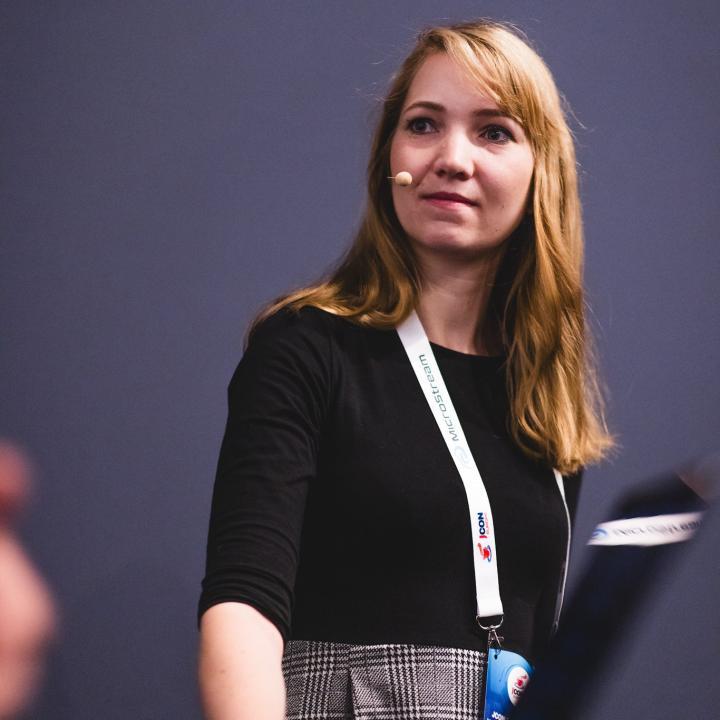 Sandra Ahlgrimm
14:50 to 15:20
When Bots Think for You: AI Automation and the New Frontiers of Data Privacy
Cybersecurity Stage — 30 minutes Artificial Intelligence Real case studies Automation
As artificial intelligence increasingly automates complex cognitive tasks, organizations face the challenge of balancing technological efficiency with the protection of personal data. Intelligent systems now collect, analyze, and act on vast amounts of user information, reshaping traditional ways of working. Read More...
 Anca Grigoras
 Evelin Bratu
14:00 to 14:45
The Signals We Keep: Friction, Feedback, and Appropriateness in Delivery Systems
Quality engineering & Automation Stage — 45 minutes Testing Q&A Systems Automation
The world is noisy. Overwhelmingly so at times.Engineering teams have spent years trying to quieten that noise. We remove friction, smooth developer experience, and optimise delivery systems to feel faster and cleaner. Read More...
 Chris Armstrong
Powered by

10:00 to 10:10
Intro speech - Compliance in the age of AI
AI Product Stage — 10 minutes DevOps Generative AI Automation
Find out how Amazon is leveraging cutting-edge AI across its compliance services — from generative AI for code and regulatory documentation, to intelligent DevOps automation, ML-powered product classification, and large-scale regulatory ingestion. We'll also spotlight MILE, Amazon's latest contribution to AI research and the state of the art.
 Cristian Cordos